
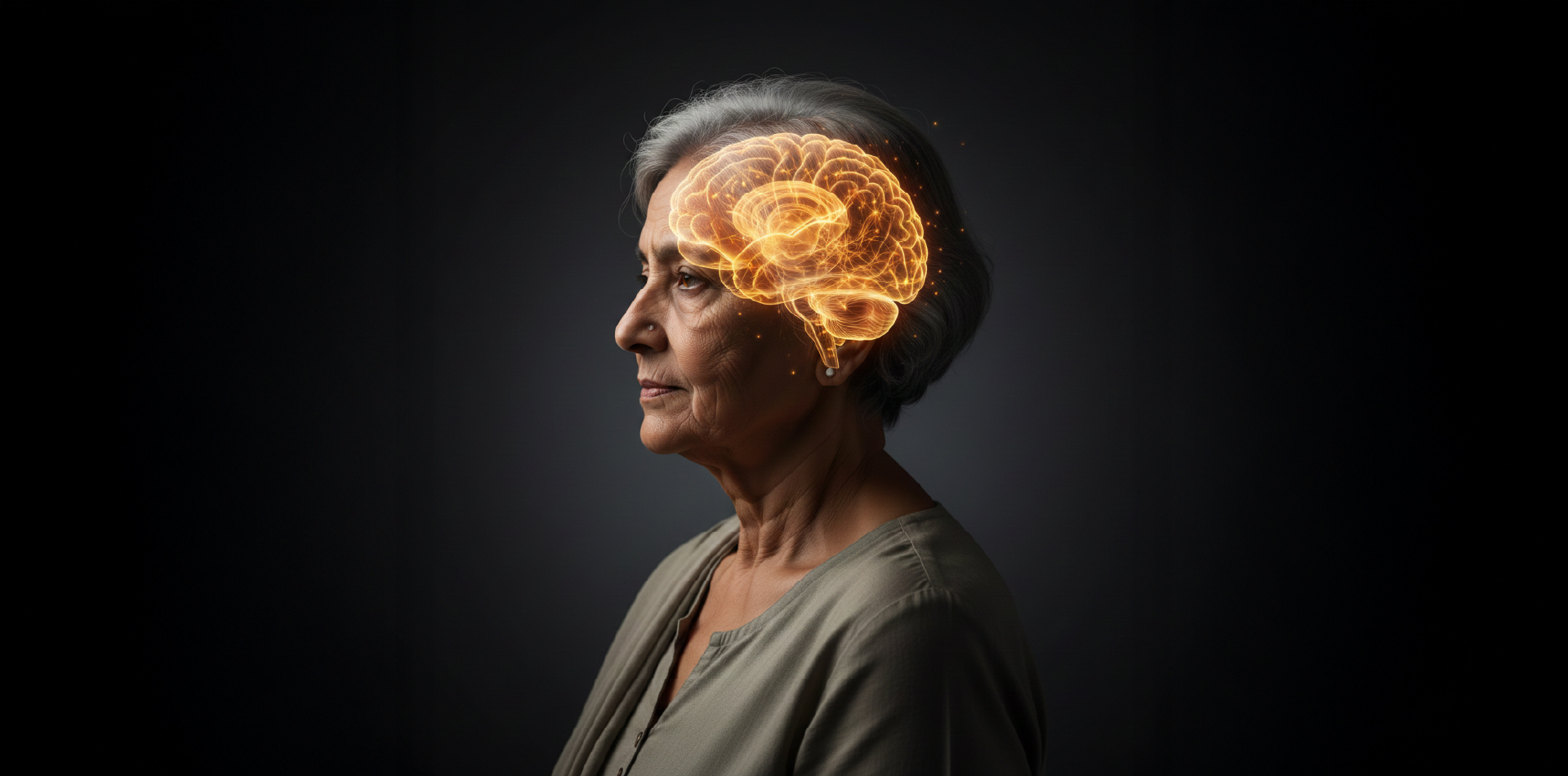
The Science of Memory: How Daily Activities Can Strengthen Neural Pathways
When was the last time your parent surprised you by remembering a childhood story you had completely forgotten? Or hummed along perfectly to an old song but couldn’t recall what they had for breakfast?
Memory works in mysterious ways and that’s exactly what makes it fascinating.
The search for nearby old age homes or nursing home care is often driven by concern, uncertainty and one prevailing myth, that memory loss is unavoidable with age. Thankfully, scientific understanding has evolved far beyond this belief.

Ageing doesn’t mean the brain “switches off.” In fact, with the right stimulation, it can remain curious, responsive and surprisingly resilient. Today, science shows that cognitive health for seniors is not just about medical check-ups or brain exercises.
It’s about what happens in everyday life with conversations, routines, laughter, movement and even simple habits we often overlook.
So, let’s break the myth right away: Memory care is not boring. And brain health doesn’t live in a worksheet. First things first: is forgetfulness always a problem? Short answer? No. Long answer? It depends.
Forgetting where you left your glasses or repeating a story occasionally is often a normal part of ageing. But what truly shapes brain health for seniors is how actively the brain is used, not how many candles are on the birthday cake.
Here’s a fun thought: Have you noticed how seniors can recall lyrics from decades ago but struggle with new phone passwords?
That’s because memory strengthens with use, emotion and repetition and weakens with stress, isolation and inactivity. This is where science introduces us to a powerful concept: neuroplasticity in elderly adults.
Let’s bust another myth. Neuroplasticity does NOT end after 40. It doesn’t retire at 60. And it definitely doesn’t disappear at 70.
Neuroplasticity in elders simply means the brain’s ability to adapt, form new connections and strengthen existing ones, even later in life.
Think of the brain like a garden. If certain paths are walked daily, they become clear and strong. If others are ignored, they slowly fade. Daily activities help keep those paths alive and that’s the essence of strengthening neural pathways.
This is exactly why modern senior care is evolving beyond traditional institutional setups and toward more lifestyle-focused environments such as assisted living and senior living, where daily engagement is part of life, not an afterthought.
Medication can manage symptoms, but it replace mental engagement. Cognitive health for seniors depends on how often the brain is challenged in meaningful ways.
Memory works best when:
- Activities feel purposeful, not forced
- Engagement is emotionally positive
- Routines feel familiar yet stimulating
- Seniors feel safe, respected and confident
This is why families today are rethinking choices between nursing home care and more engagement-led alternatives that prioritise mental and emotional wellbeing alongside safety.
Activity #1: Conversation (Yes, Simple Talking Counts!)
Ever noticed how seniors light up during a good conversation?
Chatting about old memories, daily events or even random observations activates multiple brain areas at once, language, recall, emotion and attention.
Questions like:
- “Do you remember how festivals were celebrated earlier?”
- “Which school teacher made the biggest impact on you?”
- “What was your favourite meal growing up?”
These aren’t just conversations, they are gentle memory care activities disguised as bonding moments.
In many nearby old age homes, conversation is often limited to care instructions. In contrast, environments that encourage interaction allow memory to stay active and alive.
Activity #2: Music – The Brain’s Favourite Shortcut
Why does music unlock memories so effortlessly?
Because it taps into emotional memory, which often stays strong even when other types weaken. This is why music-based dementia prevention activities are so effective.
Activity #3: Movement That Feels Like Living, Not Exercising
Here’s a question: Do you think the brain likes sitting still all day? Not at all.
Simple movements like walking, stretching, light yoga or even helping set the table improve blood flow to the brain. Physical motion activates coordination, balance and focus, all essential for brain health for seniors.
This is one reason why families google assisted living and increasingly prefer spaces where movement is part of daily living rather than restricted or clinical.
These are not random tasks. They are structured memory care activities designed to support long-term brain resilience.
This is why geriatrician-led memory care models focus not just on cognitive exercises, but on emotional regulation, routine and environment.
Memory changes in seniors are complex and require specialised understanding. Geriatrician-led memory care ensures that cognitive support is aligned with:
- Physical health
- Medication effects
- Emotional wellbeing
- Lifestyle patterns
Memory doesn’t live only in the brain. It lives in stories. In habits. In emotions. In connection. That’s the quiet science behind modern memory care activities. And that’s why neuroplasticity in adults is not just possible, it’s powerful.
After all, ageing doesn’t mean the end of growth. It simply asks us to grow differently and more gently.


you can trust.
 Book An Appointment
+91 99877 22792
Book An Appointment
+91 99877 22792

